
Neuro-Challenges (Unique Configurations)

A diagnosis isn’t a life sentence; it’s the instruction manual no one handed you. But what if you don't have that diagnosis yet, and you simply feel that your child is wired differently? Whatever your case may be, this is not a dead end. These "small giants" often surprise us far more than a world full of rigid structures and labels ever could.
If you feel the environment wasn't designed for your child’s unique brain—whether it's Autism, ADHD, Trisomy 21, or a nameless sensitivity—I want you to know that reaching their full potential is possible. You don't have a "defective" child; you have a human being configured differently than what society is used to. Remember, many of the geniuses who transformed humanity were children with unique configurations. This is where we stop looking for blame and labels to focus on what truly matters: real-world progress, independence, and your child’s own light.
The Tactical Relief (Biological Hijack) Mechanical Predictability and Silence. > In the heat of a meltdown or dysregulation, your child’s brain is experiencing a "biological hijack." Any word or logical explanation at that moment is just noise that feeds the fire.
The Tactic: Do not negotiate or ask for "calm." Eliminate external triggers (lights, crowds, noise) and become an anchor of silence. Use short commands and tell them exactly what will happen in the next 2 minutes. When they know what to expect from their environment, their internal alarm system drops. Don't seek immediate obedience; provide an immovable structure where they can feel safe.
Post-Crisis (The Caregiver’s Refuge)
You exploded again. And now, while they sleep, guilt is eating you alive. Your head is a storm of noise: rage, frustration, and that crushing feeling that you are repeating the very patterns you swore to break. You feel those "old tapes" from your own childhood—your parents' voices—playing on a loop, and it terrifies you to think you’re passing that same weight onto your children. You think you’re failing, that you’ve lost control, and that "gentle parenting" is a myth that just doesn't work for you.
But stop: no one taught us how to be parents. Even in a world full of books and videos, your history and your burden are unique. Parental burnout isn't a lack of love; it’s a total lack of fuel. If you feel like a "bad parent" because you have nothing left to give, this is your space to heal the root. To take care of them, you must stop being the last item on your own list.
The Tactical Relief: > Strategic Selective Negligence. > When the guilt of "not being When the guilt of "not being enough" starts to suffocate you, remember: you cannot pour from an empty cup.
The Tactic: Identify the three "mandatory" tasks of your day that only exist to feed your perfectionism (deep-cleaning the kitchen, answering non-urgent emails, meeting a social standard) and drop them from your list.
The Hack: Front-line self-care isn't a spa day; it’s deciding which part of the house or the routine you are going to let "sink" so that you can breathe. Giving yourself permission to be imperfect is the only fuel that will break the cycle of explosion. Prioritize your stability over your productivity.
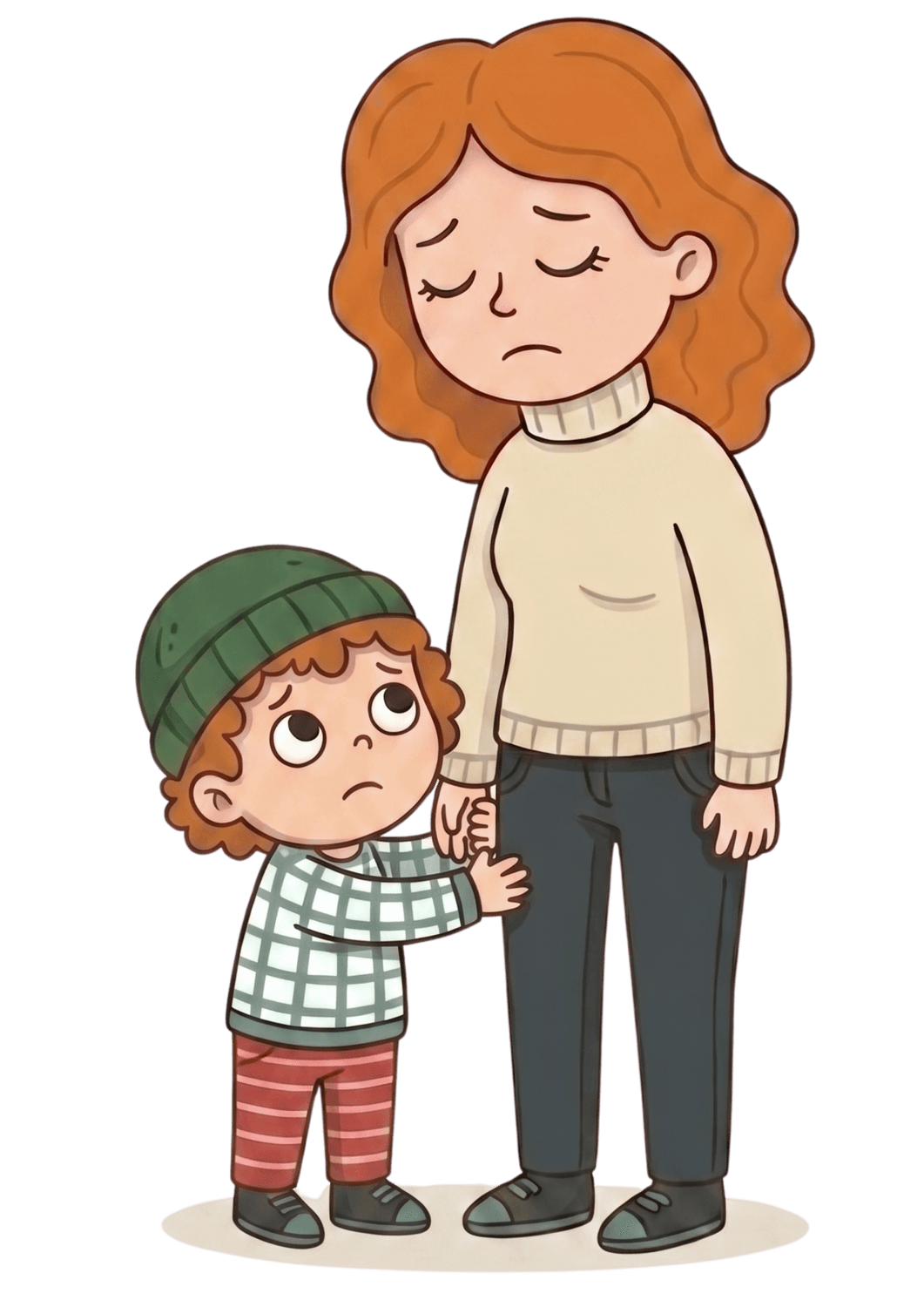
Do you remember before you were a parent, seeing a meltdown in public and swearing to yourself, "That will never happen to me"? You were certain that with the right boundaries, your child would never put you through that shame. And yet, here you are: feeling rage, a burning frustration, and a total disconnection from that small human being in front of you. We are told about the "terrible twos" or the "scary teens" as phases to endure, but you feel like every stage is a thirstier desert than the last, with no water in sight to soothe the chaos. This isn't just a tantrum; it’s the feeling that the bridge of communication has fractured, and you don’t know how to cross it again.
The Tactical Relief: > Connection Before Correction (The System Reset). > When the desert is burning, don't try to plant anything; find water first. In the middle of a crisis, the logical brain (yours and your child’s) is "offline."
The Tactic: Forget the lecture and the moral lesson in that moment. Get down to their physical level, maintain an open posture, and use Tactical Validation: "I see you are very angry; this is hard for you."
The Hack: By validating, you become their external regulator. You are sending a safety signal to their nervous system that says: "I’m not fighting you; I’m in the fight with you." Once the system cools down, the bridge repairs itself. Teaching only enters when the threat disappears.

Every day your child comes home from school a bit quieter, more scared, and more resistant to going back. You know they are being bullied; there’s someone in class stealing their peace. You try everything: you tell them to ignore it, to tell the teacher, to learn martial arts, or to "speak up" and defend themselves. But every tactic seems to backfire, and the isolation grows.
Or is it the other way around? Are you the one getting calls from the school saying your child is the "aggressor"? At home, they are an angel, a sweet child, and you don't understand what breaks when they step through those school doors. You are torn between wanting to help and the agony of not knowing how to regulate a behavior you don't recognize. Socialization isn't child’s play; it’s a battlefield where the trauma of being bullied and the desperate tactic of aggression are two sides of the same coin: the search for a place to belong.
The Tactical Relief: > Emotional Counter-Intelligence and the Power Script. > Social conflict feeds on reaction. If there is a reaction (fear or explosion), the "system" gets a reward.
For the Victim (The Neutrality Script): Stop telling them to "ignore it." Teach them to be emotionally boring to the aggressor. Short responses, neutral eye contact, and zero emotion. If there is no "show," the bully loses interest.
For the Aggressor (Functional Analysis): Your child isn't "bad"; their behavior has a function. Are they seeking power because they feel small? Are they trying to belong? Identify why they are attacking. When you give them a healthy way to gain that power or belonging, the aggression becomes unnecessary.
The Hack: Resilience isn't built by teaching how to hit back, but by teaching how to handle power. Attack the unmet need, not the child.
School & The System (Stars in Square Molds)

The school system measures an "average" that doesn't exist. Report card day becomes a nightmare: they tell you your child is falling behind, underperforming, or "incapable." They promise new strategies to help them "perform," but let’s be honest: perform for what? Modern education is square, and your child is star-shaped; you cannot fit a star into a square hole without breaking its points.
Here, two realities collide: the child labeled "insufficient," whose self-esteem crumbles with every grade, and the child for whom school just "isn't big enough." The latter shuts down out of boredom; everything is so easy they become defiant, turning the classroom into a party and getting labeled as "disobedient" simply because they can't adapt to the slow pace of the environment. In both cases, the system tries to sand down their edges to make them flat, ignoring that learning to handle frustration and resilience is a thousand times more important than long division. Happiness and real success aren't found on a report card.
The Tactical Relief: > Identity Detachment and the "Resilience Curriculum." > Stop fighting the system over a grade; the system won't change today, but your child’s perception of themselves can.
The Tactic: Treat school as an administrative formality. It’s a place to get a piece of paper, not the place that defines who you are. If your child doesn't fit, teach them that their value is in their ability to get back up, not their GPA.
The Hack: If your child is the one who is bored, give them permission to see school as their "office job"—do the minimum required to get out quickly—and spend home energy on high-intensity projects that actually challenge their genius.
The Truth: Your home must be the place that celebrates the star, not the place that regrets they aren't a square. Strengthen their mind, not their report card.
The Sovereignty of the Immediate}
The Reality: When a family faces a significant health diagnosis or a long-term neurodevelopmental condition, the mind naturally panics, attempting to solve the next ten years in a single day. This creates paralyzing anxiety, cognitive fatigue, and an overwhelming sense of helplessness for the caregiver.
Our Approach: Kindred Clarity shifts the focus from an unpredictable future back to the power of the present moment. We do not offer magical quick fixes; we offer a sovereign architecture to manage crisis through radical presence.
The Core Protocol:
The One-Minute Rule: Training the mind to shrink the operational map when anxiety strikes. If the next year feels impossible, we only govern the next hour. If the next hour feels heavy, we only master the next minute.
Sovereign Grounding: Tools to anchor the caregiver’s nervous system, ensuring that even in the middle of a hospital room or a clinical evaluation, the home base remains emotionally stable.
Sustainable Endurance: Transitioning from reactive crisis management to a sustainable daily rhythm that honors the reality of the condition without letting it consume the family's identity.

THE ENTRY POINT
Enter Space
Access Momentum—our foundational framework and intensive program engineered for profound individual alignment. Securing your sovereign process today grants you 3 months of complimentary access to Lyzeora Suite, your private laboratory of continuous workshops and biological self-regulation tools.

Real tools for human challenges.
Bridging Kindred Clarity, Myself, and Nexum. A dedicated ecosystem for parental connection and individual growth.
STAY CONNECTED



S.O.S. Rapid Intervention

S.O.S. Integration Response
Direct Audio Guidance in under 24h.